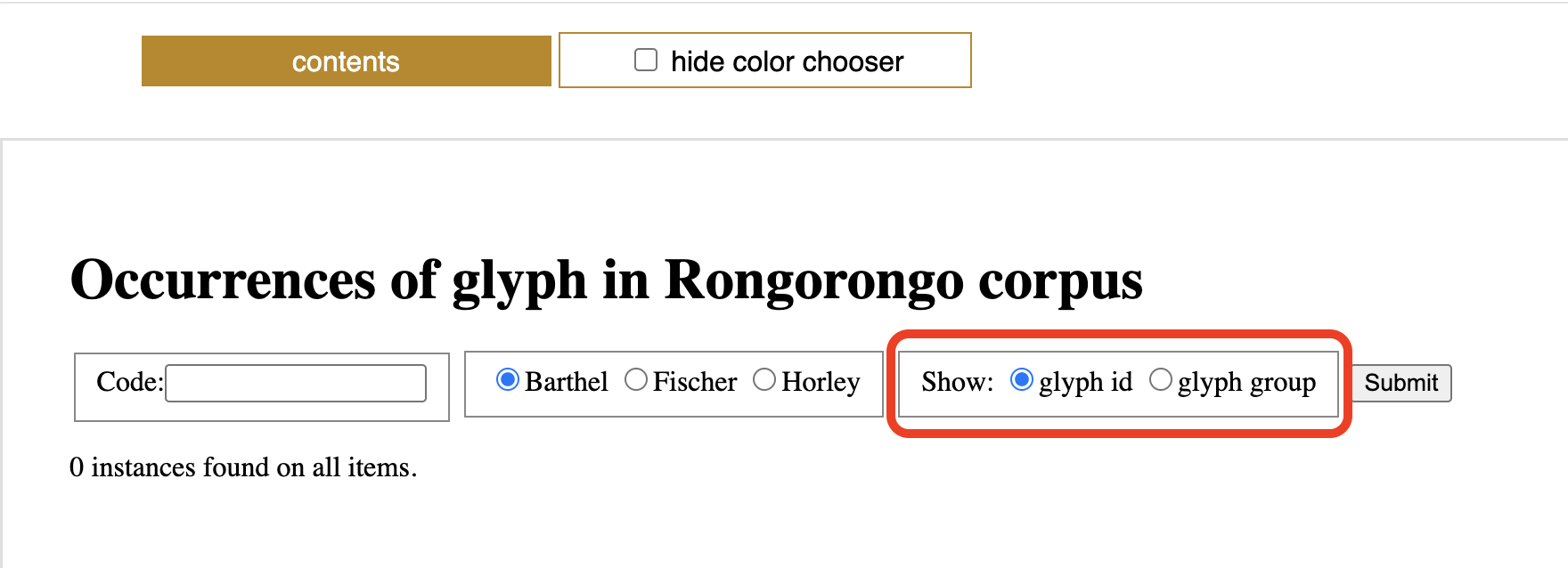
I have now added glyph group number display throughout the corpus site. At the same time, I have chosen to adopt a more consistent approach to displaying the numbers:
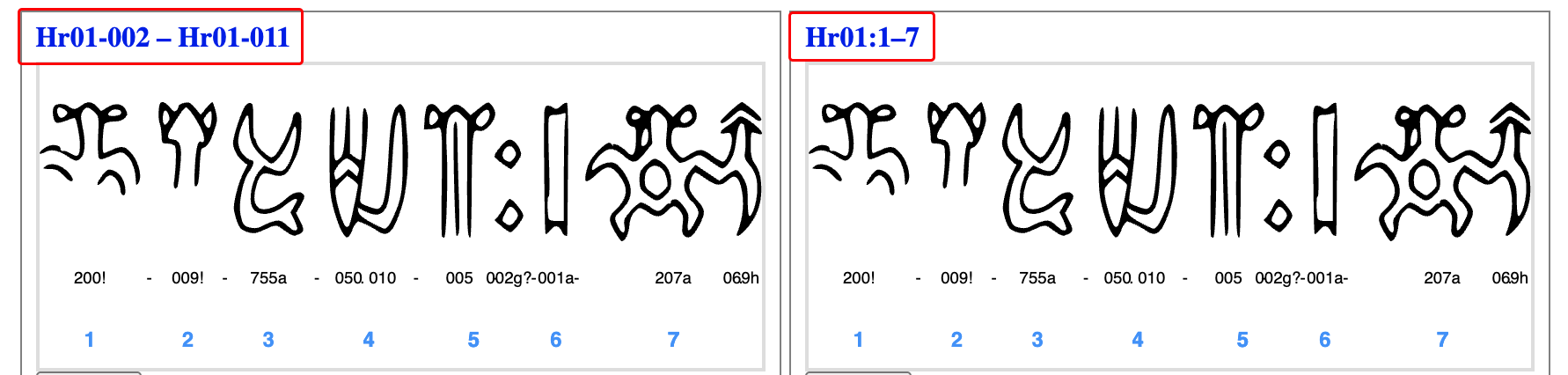
As seen in the above example, the snippet on the left is labelled using the site-specific “glyph ids”. Glyph ids have the line identifier followed by a hyphen and a 3 digit zero-padded number.
The snippet on the right is labelled using Horley-style glyph group numbers. Glyph group numbers are shown with the line identifier followed by a colon, and the numbers which are generally one or two digits—only rarely three digits. These numbers are shown without any “zero-padding”.
As of now the glyph group numbers are a display option throughout the website:
- On the standard line-wise display of the corpus items
- On the corresponding display with wrapped lines
- In the glyph index, as a display option
- In the new glyph list, as a display option
- In the snippet viewer:
- Glyph group numbers are displayed below the codes
- Glyph group numbers are an option for choosing snippets
- If the glyph group number option is chosen, the range is displayed as a glyph group number range, as illustrated in the example above
- On the results of glyph searches in context